• I filed my 2025 taxes today. If you’re thinking that I was running significantly late, you’re not wrong. Luckily, TurboTax has a fast and easy extension form that I filed on April 14.

    When I filed for the extension, it said I could file my return as late as October. “Who needs all the way to October?” I scoffed internally. “I need about three more days.” If you’re thinking I took a lot longer than three days, you’re still not wrong. 

    The thing is, it actually took me three more days of working on it. But with the help of procrastination and distraction, I managed to stretch those three days out over three months, and a task that should have taken less than a week has been hanging over my head for quite a bit longer than it had to.

    Taxes matter. But distraction and procrastination are like evil twins who stop us from doing things that matter even more than taxes. Jesus told a story in Matthew 25 about being ready for His return. In it, five wise bridesmaids are prepared, and five foolish ones aren’t prepared for the return of the bridegroom.  (Matthew 25:1-13) At the end of the story, the door is shut, and it’s too late for the bridesmaids to enter by the time they’re ready. 

    The truth is, God has things for us to do. They matter far more than getting our taxes done, though I might have a hard time convincing the government of that. If you don’t have a relationship with Jesus, asking Him into your heart is the most important thing you could ever do! It’s too important to be distracted by the shiny, worthless things the world offers us instead. The idea that we will get right with God later is a great way to miss the blessing of walking with Him today and to risk eternity with Him.

    But if you’re a God-follower, He also has things He wants you to do. Living ready isn’t a one-time decision we make. It’s an ongoing relationship with Christ, where we choose to focus on Him daily and to walk in His divine grace. That’s what Romans 13:14 means when it tells us to “put on the Lord Jesus Christ, and make no provision for the flesh… ” (NKJV). The Greek word for provision there means forethought. Forethought equals attention. We will either be paying attention to what we want or to what God wants, but it’s pretty hard to do both! 

    I’ve heard an analogy I want to use here. Living ready is kind of like a parachute: you may not feel like it matters when the plane is going along smoothly, but for it to matter, you need to have it on before the plane goes down. If you knew the plane was going to crash, nothing would distract you from putting on your parachute; nothing would seem more important. But friend, one thing we are assured of in this world is that the plane will go down! Jesus said it, “In this world you will have trouble.” (John 16:33 NIV) When trouble comes, we don’t have to panic if we have been living ready. Colloquial Christianity doesn’t prepare you for trouble; a real relationship with the living Christ does. 

    So my question to you today is this: How are you doing with Jesus? Have you been distracted by what the world has to offer? Procrastinating on getting to know Him? Thinking you’ll turn to God when or if you exhaust all your other options? Maybe this is your alarm, your reminder not to squander the life He’s given you. There is so much grace and beauty in a life lived ready for whatever comes next, a life lived awake to the presence and purpose of God for you. My prayer for you is that you don’t miss any of it!

    Photo by lidierme nascimento on Pexels.com

  • Gratitude is such a catchword in the church that it has almost lost its meaning. We think of gratitude as a quick “thank you” directed at the sky when things go our way: traffic wasn’t bad, we got a good parking spot, gas prices went down (can you tell I drive a lot?). But the Bible presents gratitude as so much more than a feeling of thanks for our blessings; Biblical gratitude is not a feeling of gladness that it all worked out, but a choice. 

    We see this in Luke 17. Ten lepers come to Jesus begging for mercy. They stand far off, because lepers weren’t allowed to mingle with the crowd, and loudly call to Him, trying to get His attention, hoping to be healed. And Jesus heals them. I think all of them felt glad. I’m sure that each one of them had a feeling of thankfulness. But only one came back to express his gratitude. 

    He fell to the ground at Jesus’ feet, thanking him for what he had done. This man was a Samaritan.

    Luke 17:16 (NLT)


    The Greek word used in Luke 17:16 is eucharisteo, meaning “to actively show gratitude.” The feeling of gladness in all ten of their hearts as they looked down and saw that they were healed wasn’t counted as gratitude. Gratitude was not in the feeling; it was in the choice to return to the Source of the gift in an act of thanksgiving. It’s the same word used in 1 Thessalonians, where Christians are commanded to eucharisteo in every situation. 

    Be thankful in all circumstances, for this is God’s will for you who belong to Christ Jesus.

    1 Thessalonians 5:18(NLT)

    Active gratitude. In all circumstances. Notice it doesn’t say for all circumstances. There are things that we cannot be thankful for. And in those moments, we probably won’t feel thankful either. But the imperative in Scripture is that, even then, we can kneel before Jesus in gratitude for all He has done for us.

    Jesus tells the leper that his faith has healed him (Luke 17:19), which always seemed funny to me when I was younger. This guy was already healed. That’s why he was coming back in gratitude. So for Jesus to tell him he’s healed seemed redundant. So what was Jesus really talking about here?

    The Greek word in verse 19 for healed encompasses so much more than a physical healing. The word sozo is translated in different contexts as saved, delivered, and healed. The original Greek audience would have understood sozo to mean all three at once. Our gratitude is powerful, you guys!

    Gratitude has a few healing properties. First, it helps us have healthy relationships. Without gratitude, life’s hardships can leave us bitter and complaining, towards both God and others. Bitterness places blame for what went wrong in a situation, often causing us to point fingers at the ones that we feel failed us, whether that’s God, friends, family, or even ourselves. Replacing it with intentional gratitude can help us to see the presence of God even in the situations where things didn’t go according to plan. People who lean towards bitterness and blame will struggle in their relationships, leading to more bitterness and creating a downward spiral. The exit point for that spiral is intentional gratitude.

    Another way that gratitude heals us is that it’s the antidote to our anxiety and depression. Biblical, intentional gratitude changes our focus. Like putting on a powerful pair of glasses, looking at our lives with gratitude changes how we see everything, even our difficulties. Those problems that looked insurmountable begin to look like a testimony in the making when we focus our eyes on who God is and what He has done for us already. 

    Leprosy left people scarred for life, profoundly visibly changed. So many of our problems in life have the potential to be that way. Nine lepers went back to their lives, healed but scarred, with permanent reminders of who they had been. I like to think that when the tenth one, the one who practiced gratitude, stood up, he was whole, unscarred, completely healed, sozo. Because that’s what God can do when we turn to Him with intentional gratitude.

  • Imagine being locked up in a cold, dark cell. Bricks surround you, except for a locked iron door. Day after day, you sit there, alone in the darkness. Perhaps you’re even wounded in there, bleeding inside your prison, with no medical supplies. Now imagine that you not only hold the key to the door, but you are the one who constructed the prison. Brick by brick, you built yourself into the walls that now hold you. People come to the door, friends and family, and talk about your plight. 

    “You’re right to stay in there!” some of them say. “ I would never leave either.”

    Others offer a different perspective. “Just come out,” they plead. “It isn’t worth staying in there forever.”

    Jesus stands just outside the door as well. “It is finished,” He says. “Come out. I have healing for your wounds.”

    But you stubbornly refuse to budge, creating walls and space between you and those you love, space between you and your Savior. 

    You’ve probably guessed that the prison in this story is unforgiveness. The Bible has a great deal to say about forgiveness, both received and given. 

    Peter came to Jesus and asked, “Lord, how often should I forgive someone who sins against me? Seven times?” “No, not seven times,” Jesus replied, “but seventy times seven! Matthew 18:21-22 NLT

    Forgiveness, Jesus says, isn’t optional. Forgiving the same person roughly 500 times sounds irrational, but it’s the standard Jesus set for Peter. Realistically, if you’re counting to 500, you’re missing the point.

    Bear with each other and forgive one another if any of you has a grievance against someone. Forgive as the Lord forgave you. Colossians 3:13 NIV

    Forgiveness, Paul says, isn’t optional. Five, five hundred, five thousand offenses, God instructs us to forgive them all. If this sounds to you like a formula for becoming a doormat, you may need a little bit of clarity on what forgiveness is and what it isn’t.

    Forgiveness is working through your hurt with Jesus; it isn’t explaining your hurt away. Forgiveness is releasing the offense to God to help resolve your anger instead of pretending your anger doesn’t exist. It’s not excusing a wrong, but leaving justice in the hands of God. Forgiveness isn’t reconciliation; it doesn’t require an apology or explanation. It isn’t a feeling. It’s a grace-empowered choice we make. 

    Unforgiveness leads us into bitterness and resentment. It can bring up our own guilt, shame, and tendency to isolate ourselves. It’s also sneaky. We can think we’ve forgiven someone, only to be surprised by a sudden burst of anger or hurt that informs us we aren’t quite as done with it as we thought we were.

    “Forgiveness is not an occasional act; it is a constant attitude.” Dr. Martin Luther King Jr.

    The frame around God’s command to forgive is the forgiveness that has been given to us. Our inability to forgive can be an indicator that we have not yet fully accepted the forgiveness and grace that God has made available to us. When we struggle with our own guilt or shame, it’s much easier to take a posture of unforgiveness towards others. Understanding the radical forgiveness that God gives encourages my heart to give that forgiveness to others.

    But if we confess our sins to him, he is faithful and just to forgive us our sins and to cleanse us from all wickedness. 1 John 1:9 NLT

    The only prerequisite for our forgiveness is repentance. But often we continue to live in self-doubt or self-condemnation. We are really doubting the goodness of God when we do this! It’s time to stop and believe the Word of God about the forgiveness He has already given us. Once we apply the forgiveness of God to our own mistakes, the next step is to give the forgiveness we’ve been given to others who have hurt us.

    “To be a Christian means to forgive the inexcusable, because God has forgiven the inexcusable in you.” CS Lewis

    Make allowance for each other’s faults, and forgive anyone who offends you. Remember, the Lord forgave you, so you must forgive others. Colossians 3:13 NLT (emphasis mine)

    You must forgive others. There is no caveat given here for situations that have been horrific, traumatizing, or purposeful. No exception for completely unrepentant people. My forgiveness for the people who have hurt me most must rest, not in their right to be forgiven or my ability to pay them back, but in God’s ability to heal, restore, and redeem the brokenness they brought into my life.

    Yeah, you might be saying, but you don’t know what happened to me! You’re right, I don’t. But I know what happened to me. And I know that God, who calls me to forgive, has the same call for you. The most beautiful thing has happened to me since I began the journey of forgiveness. I have seen God heal my emotional wounds. 

    He heals the brokenhearted and binds up their wounds. Psalm 147:3 ESV

    The work God does in us, He can only do if we forgive. Choosing forgiveness is how we open the prison to let Jesus in so that He can cleanse and heal the wounds inflicted on us. Only through forgiveness will we ever see the redemption of our suffering.

    If you realize that you have been walking in unforgiveness, either toward yourself or others, today is the day to open the door and step out of the prison you’ve constructed. Not because the wrong was okay or the hurt wasn’t real, but because God is bigger than all of it. His command to forgive is only and always for our good, and His ability to enact justice and redemption is beyond anything that we can imagine. Begin with a prayer of gratitude for the forgiveness that has been offered to you, then move into a commitment to forgive, like Jesus, the inexcusable things that have been done in your life, and continue to live in freedom and healing from the past wrongs done to and by you.

    Photo by Olga Lazacovici on Pexels.com

  • Big, iridescent green beetles buzz loudly, crashing into my hands and face as I pull figs from my tree. I’m not a fan of loud bugs or hard, crunchy bugs. But every morning for weeks each summer, I brave the beetles that live in the tree to harvest the figs I’ve grown. But why? Figs aren’t better than other fruits that come bug-free and plastic-wrapped from the farmers’ market or grocery store. So why do I go out in the August heat, the rain, the bugs? Why is this the only part of my garden that I bothered to cover with plastic during the deep freeze last winter?

    The secret lies with my memory. I wasn’t older than four the first time my grandfather put me up in his fig tree. My grandpa was a Cajun fisherman and farmer. He didn’t talk a lot, but he was great at quietly doing things for and with us that made us feel loved. And one of those things was picking figs. He would pick me up and hoist me onto one of the branches, and I would scramble around, picking all the figs I could and throwing them into the five-gallon bucket he held under me. When neither of us saw any more that were ripe, he would pull me back down, and we would take the bucket of figs to a shady spot, usually the steps going up into the house. There we would sit, and he would peel them deftly with his tiny paring knife while I chattered about whatever came into my little head. The first one he peeled was always mine, for helping. Then he alternated: one for him, one for me. I don’t remember anything he said during those times together, but I remember how loved, safe, and valuable I felt sitting in the shade with my grandpa eating the figs I’d helped pick.

    Memory adds color to the pictures of our life. My memories of my grandpa color the act of picking the figs off my tree with the beautiful colors of fun and love, in spite of the beetles. Our memories of the past naturally change our perception of the present and our thoughts about the future. 

    This power is what God calls us to harness in Psalm 105:5: “Remember the wondrous works that he has done, his miracles, and the judgments he uttered.” (ESV) The dire situation I’m facing now isn’t worse than what He’s helped me through in the past. When I remember how He showed up then, those memories can color today’s problems with faith, hope, and peace. Whatever you find yourself facing today, I pray that you remember God’s past faithfulness, and that it colors your day with the peace that passes all understanding!

  • Twenty-five years ago last spring, I knelt on the floor at prayer meeting, begging God for a miracle. I was 16 weeks pregnant, and I had gone that afternoon to get my first ultrasound. I was so excited to see my baby. What should have been a beautiful and joyful experienced taken a turn for the worst. The still screen, the silence from the ultrasound tech. It wasn’t at all like I thought it would be. There was a small anomaly, and the baby looked smaller than it was supposed to be. The technician gave platitudes: perhaps you’re not as far along as we thought you were; if nothing changes, we will do another ultrasound next week; by then, we should be able to see it. 

    There was a kindness and a sadness in her tone that let me know she didn’t think that we would find the heartbeat next week. And so that night at prayer meeting, I sobbed my heart out to God on the floor. I prayed that God, the God who could do anything, would work a miracle. That even if my child had died, God would resurrect it and allow it to continue to grow inside of me. The next day, I ended up at the emergency room, cramping and hemorrhaging, not the recipient of the miracle I had requested.

    So many of us have stories like this. Prayers were prayed, and we believed that God would come through in a specific way. And He didn’t. Situations where we believed we would see the miraculous, and we didn’t. And sometimes we allow that to cause doubt, because God didn’t do what we thought He would.

    The story of Naaman in 2 Kings 5 tells of people who must have faced the same problem. First, let’s look at the little girl in the story. 

    Now bands of raiders from Aram had gone out and had taken captive a young girl from Israel, and she served Naaman’s wife. She said to her mistress, “If only my master would see the prophet who is in Samaria! He would cure him of his leprosy.” 2 Kings 5:2-3 NIV

    Surely, captivity as a household slave in Aram wasn’t how this girl thought her life would turn out. She must have been raised in one of the minority of God-fearing homes in Israel at this time; how else would she have the faith to suggest that Naaman go to God to be healed? Did she ever wonder why God allowed her to be taken captive? Maybe. But if she fought with doubt, we know by her response that she won. Because when confronted with a big problem, her response was still faith. She still believed that God was capable of miracles; and not only that, she believed that God would do a miracle for Naaman. Believing God can and believing He will aren’t the same thing. We must believe that God not only can intervene on our behalf, but also that He will. 

    Next, let’s look at Naaman. 

    Naaman went to his master and told him what the girl from Israel had said. “By all means, go,” the king of Aram replied. “I will send a letter to the king of Israel.” So Naaman left, taking with him ten talents of silver, six thousand shekels of gold and ten sets of clothing. 2 Kings 5:4-5 NIV 

    He must have been desperate to believe that the God of a defeated people could help him. His own gods had proved powerless. If they hadn’t, he wouldn’t have been open to the idea of going to a different God for a miracle! But even as an idol worshipper, he must have had a soft heart. He went to his king and asked for permission to go to a rival king for healing. And he did it because a slave girl suggested it! When she spoke, the chances of her being listened to were tiny. Yet on her suggestion, Naaman loaded up and took a caravan of gifts and gold to find the prophet and be healed. Yet when the prophet didn’t offer healing according to Naaman’s preconceived ideas, he definitely struggled with doubt.

    Elisha sent a messenger to say to him, “Go, wash yourself seven times in the Jordan, and your flesh will be restored and you will be cleansed.” But Naaman went away angry and said, “I thought that he would surely come out to me and stand and call on the name of the Lord his God, wave his hand over the spot and cure me of my leprosy. Are not Abana and Pharpar, the rivers of Damascus, better than all the waters of Israel? Couldn’t I wash in them and be cleansed?” So he turned and went off in a rage. 2 Kings 5:10-12 NIV

    Naaman thought he knew what should happen. He thought that God would do it his way. Surely it is no stretch for any of us to see ourselves here! We often think we know what God will do, and how he will do it. And when he doesn’t, we storm off in a huff, sure that He was wrong and that doing the next thing he tells us to do is neither advisable nor worthwhile. Lucky for Naaman, though, he had a habit of paying attention to what his servants suggested to him. (I think this probably speaks to the kind of person he was.) This is the second time in the story that he listened to advice given to him by his own servants.

    Naaman’s servants went to him and said, “My father, if the prophet had told you to do some great thing, would you not have done it? How much more, then, when he tells you, ‘Wash and be cleansed’!” So he went down and dipped himself in the Jordan seven times, as the man of God had told him, and his flesh was restored and became clean like that of a young boy. 2 Kings 5:13-14 NIV

    Naaman humbled himself; and he received healing, just not the way he had expected. When we put aside our own expectations of what God will do and how He’ll do it, that’s when we will see Him move. 

    The last character I want to look at is the king of Israel.

    The letter that he took to the king of Israel read: “With this letter I am sending my servant Naaman to you so that you may cure him of his leprosy.” As soon as the king of Israel read the letter, he tore his robes and said, “Am I God? Can I kill and bring back to life? Why does this fellow send someone to me to be cured of his leprosy? See how he is trying to pick a quarrel with me!” When Elisha the man of God heard that the king of Israel had torn his robes, he sent him this message: “Why have you torn your robes? Have the man come to me and he will know that there is a prophet in Israel.” 2 Kings 5:6-8 NIV

    The king of Israel at this time was Jehoram (sometimes called Joram), the son of Ahab and Jezebel. He already had a history with Elisha. He had seen God work a miracle for Israel’s army through Elisha’s word two chapters earlier. And here, he’s presented with a problem that he has no possibility of solving, a problem with the potential to have severe consequences for his kingdom. And he doesn’t even think of going to the prophet. He doesn’t even consider turning to God. All of his reliance is on himself and his inability to do anything about Naaman and his leprosy problem. 

    Down the road of doubt is self-reliance. Because if I don’t truly trust in God, the only one left to trust in is me. And when a problem comes along that is beyond me, all I can do is to “tear my robes” in grief and anger. 

    But friends, the good news is that God is trustworthy. My story wasn’t over that day in the ER. God was answering; I just had to be patient to see it. It wasn’t the miracle I asked for. It was a different series of miracles that He was preparing for me. May we always stay open to the miracle, even when life isn’t turning out the way we thought it would, and God isn’t working like we thought He would. Even when the answer isn’t what we wanted, or it doesn’t come in the way we wanted, let’s hold onto our trust in Him.

    Photo by Nadin Sh on Pexels.com

  • Photo by David Bartus on Pexels.com

    Last week, I wrote about my journey to rediscover the goodness of God. God has led me through Psalm 27 in the past week, verse by verse, like a textbook on God’s goodness and His grace for hardships. So this week, I want to talk you through what I’m learning.


    Psalm 27:1-3
    The Lord is my light and my salvation;
    Whom shall I fear?
    The Lord is the strength of my life;
    Of whom shall I be afraid?
    When the wicked came against me
    To eat up my flesh,
    My enemies and foes,
    They stumbled and fell.
    Though an army may encamp against me,
    My heart shall not fear;
    Though war may rise against me,
    In this I will be confident.


    In these verses, we can see that David has some pretty big problems: the wicked want to devour him, an entire army is coming against him, warlike enemies are camped around him. But he doesn’t start the Psalm there. He begins by looking at God. If we focus on the troubles in life, we will lose confidence in God. Jesus warned us that we would have troubles (John 16:33), so we shouldn’t be surprised when hard things happen. But the only way we retain our confidence in those moments is to fix our eyes on Christ.


    Psalm 27:4
    One thing I have desired of the Lord,
    That will I seek:
    That I may dwell in the house of the Lord
    All the days of my life,
    To behold the beauty of the Lord,
    And to inquire in His temple.


    At first glance, this verse looks wildly disconnected from what came before it, but it isn’t. David is giving us the key to keeping our confidence in God. We need to stay focused on the beauty of the Lord. He doesn’t ask if he can visit the Temple. He wants to live there! If we focus on the face of God, we will keep believing in His goodness. We won’t be fearful of what He may allow in our lives. We won’t be looking at our circumstances so much that we forget His true nature.


    Psalm 27:5-6
    For in the time of trouble
    He shall hide me in His pavilion;
    In the secret place of His tabernacle
    He shall hide me;
    He shall set me high upon a rock.
    And now my head shall be lifted up above my enemies all around me;
    Therefore I will offer sacrifices of joy in His tabernacle;
    I will sing, yes, I will sing praises to the Lord.


    Joy and praise come from intimacy with God, not an absence of trouble. But in the time of trouble, He offers the greatest intimacy! Here, David is talking about being hidden by God, being brought to His secret places. God uses our hard times to pull us in closer to Himself.
    David is talking about offering praise while the trouble is still all around him. The sacrifices of joy aren’t physical sacrifices anymore. Sometimes, seeking joy feels like a sacrifice. Sometimes we want to wallow in our misery. Those are the times that God calls us to offer a sacrifice of joy.


    Psalm 27:7-8
    Hear, O Lord, when I cry with my voice!
    Have mercy also upon me, and answer me.
    When You said, “Seek My face,”
    My heart said to You, “Your face, Lord, I will seek.”


    Seeking God’s face isn’t the same as seeking His provision, His will, His directions, His protection, His mercy, His wisdom, or His blessing. Seeking God’s face is enjoying Him only for Himself, not for any other thing that He can do. How long has it been since you just enjoyed God’s presence like you enjoy being with your best friend? Just like you don’t go to the person you love most only if you need advice or help, God wants us to go to Him even when we don’t need anything, just to enjoy being with Him.


    Psalm 27:9-10
    Do not hide Your face from me;
    Do not turn Your servant away in anger;
    You have been my help;
    Do not leave me nor forsake me,
    O God of my salvation.
    When my father and my mother forsake me,
    Then the Lord will take care of me.

    Here, David is acknowledging his desperate need for God, as well as God’s overwhelming faithfulness. Earlier in Psalm 27, David uses the Hebrew word Adonai, meaning Lord or master, when he’s talking about God, and saves Lord (YHWH) for when he’s directly addressing God. This time, however, he uses YHWH when talking about God never abandoning him. YHWH is God’s personal, covenant name, and David uses it here to emphasize God’s personal covenant faithfulness. The change in his perspective sticks, though, and for the rest of the Psalm, he refers to God using His personal name for Himself, YHWH. In our seeking God’s face, our desperation for His presence, we will find Him faithful to be so near, so personal to our hearts.


    Psalm 27:11-13
    Teach me Your way, O Lord,
    And lead me in a smooth path, because of my enemies.
    Do not deliver me to the will of my adversaries;
    For false witnesses have risen against me,
    And such as breathe out violence.
    I would have lost heart, unless I had believed
    That I would see the goodness of the Lord
    In the land of the living.

    Enemies just keep coming at David. Armies of evildoers are trying to kill him, and if that’s not enough, now they’re telling lies about him. And it’s starting to get to him, right? Because here he almost loses heart. The thing that saves him is his belief that he will see God’s goodness even here on Earth.

    I was talking to someone from church about this concept last night, and he said, “You know, I don’t know what I believe about God wanting us to be happy. We think of God as our Father, and as a dad, I have to sometimes make choices that I know will make my child unhappy. But it’s for their own good.”

    But God isn’t like us. I can’t make my child happy with my presence. The beauty of my face, either physical or metaphorical, isn’t enough to inspire a disgruntled daughter or a sulky son to sing praises. But God is all of those things! His presence can bring me to my knees in joy and wonder regardless of my circumstances if I dedicate my heart to focus on Him.

    Psalm 27:14
    Wait on the Lord;
    Be of good courage,
    And He shall strengthen your heart;
    Wait, I say, on the Lord!

    God isn’t fast, y’all! David makes a point of saying here that reliance on God and focusing on Him will entail waiting. So much waiting, in fact, that he mentions it twice in one verse. But waiting on God means we never stop believing, hoping, and trusting that we will see His face, bask in His goodness, and enjoy His presence on Earth as well as in Heaven.

  • If I’m honest, I have a bit of a love/hate relationship with southern Africa. I love it immensely, but when I am there, I feel a nostalgic sadness that I hate. For the past 10 years, I’ve chalked it up to a type of homesickness called hiraeth. It’s a Welsh word that translates in English to a longing for a home that no longer exists. But last month, sitting at the edge of the Indian Ocean, watching the waves crash on the rocks, I looked a little further into it. 

    I love my life. I love my husband, my job, my grandchildren. I had none of these things in southern Africa, and if I’d stayed there, I would still have none of them. I don’t actually prefer my life in Cape Town to my life here. (Except the weather. It’s 98F with 95% humidity outside right now in North Carolina! I do prefer the weather in Cape Town. But I think that’s just common sense.) So why do I feel so sad that I no longer have a life I don’t want back?

    The beautiful thing about honest seeking is that when we truly seek an answer to life’s tough questions, He always gives us one. (Matt. 7:7) So as I sat on the rocks honestly asking that question, Jesus answered me. 

    “You don’t miss southern Africa. You don’t even miss your life here. You miss the you that you were before everything happened.” (In case you’re reading this and don’t know me, “everything” can be summarized as the unexpected disintegration of my first marriage and its consequences in the hearts of my children and me.) 

    Oof. I like to feel like I’ve grown so much since then and healed completely. But it’s a lie. I have grown in so many ways. But healed completely? Nah. 

    The thing is, I used to believe God is good. I’m not sure I have really believed that for the past ten years. Not in the deepest part of my heart. I believe wholeheartedly in His power, His strength, His love, and His redemption. But goodness? Sure, long-term goodness. We will be forever with Him in heaven, and hard things on Earth won’t matter anymore. I can get behind that idea. But good to me here, now? Well… I guess it depends on how you define good.

    David talked about how many difficulties he was facing in Psalm 27. Scholars are divided as to whether it was written while he was running from Saul’s murderous rage or Absalom’s insolent rebellion. Either way, David described enemies surrounding him, lying about him, making war against him. He even said he was forsaken by his father and mother. 

    Nowhere in the Psalm does David record God making his life easier. He doesn’t say that God showed up and wiped his enemies off the face of the earth, or even that He defeated them. No, instead, David talks about God hiding him, shielding him, and taking him in. But most of the Psalm isn’t about what God does in the fight. Most of it is about David’s fervent desire to be in God’s presence and see His face. Near the end, he makes a telling statement: “I would have despaired had I not believed that I would see the goodness of the Lord in the land of the living.” (v.13)

    Despair can be consuming, or it can be quiet. Consuming despair is loud and overwhelming. It drives us to self-medicate with drugs or alcohol; it pushes us to the extreme. But quiet despair is sneaky. We go about our lives in our normal way, and it whispers softly in our ears that God is not for us, is not trustworthy, has abandoned us. 

    I have lived a decade with a quiet despair that has whispered that God doesn’t care about my happiness, only my holiness. That He is working for my eternal good while ignoring my earthly good. That He will use me up and empty the strength from me, asking me to pour out what I don’t have and reminding me that His strength is sufficient. And that in the end, I will see His face, and it will all be worth it.

    The lies are so subtle. Because every one is almost true. And I fell for them. For years. Maybe you have too. So here are a few truths to counteract the lies that despair may be whispering in your ears.

    God cares more about my holiness than my happiness. He never wants me to be happy at the expense of being holy. He’s prioritizing my eternal good over my earthly good, but He wants good things for me on earth too. He will use me to pour out things I never knew were in me until I needed to pour them out. His strength is sufficient for me, and His power is made perfect in my weakness. And when I see His face, every hard thing is worth it.

    Do you see how subtle the changes are? But what a difference those little changes make! 

    Psalm 27 speaks to the difference in verse 8: “When You said, ‘Seek My face,’ My heart said to You, ‘Your face, Lord, I will seek.’” If I don’t seek God’s face, I won’t see His face, and I’ll struggle to believe that God is good. Seeing God shuts the door on despair. It quiets the lies that lead to fear. 

    And so, last month, as I sat on the rocks at Vic Bay, God said, “Seek my face.” I have lived a decade seeking God’s provision, His will, His purpose, His direction. But I’ve been distracted by those things from seeking His face. Gazing on His beauty, enjoying His presence. And as I seek His face, I find myself refreshed and reminded: Yes, God is good.

  • Fear… it has gripped my heart at times, making me feel helpless and hopeless. I remember the day that my husband of 21 years told me he was leaving me. I remember the knot in my stomach, the shallow breathing that was all I could do, as though my lungs had collapsed under the weight of his decision. The horror I felt as I left the table at the restaurant and hid, ashamed to be seen having my very first panic attack. 

    I had a list of things I was scared of: how this would affect our children, not having enough money, being alone and lonely, and what people would think and say. Overarching all of it was the idea that this was the end of God’s call on my life. I would be a divorced single mom–not ministry material anymore. And what would I do? I loved ministry and had never wanted to do anything else. 

    This was one of the major fear moments of my life, but it’s far from being the only one. Many times, I have faced fear. And that’s common. Over 60% of Americans admit to having at least one unreasonable fear, and every person has felt fear in their lives. God’s Word, however, stands ready to challenge our quick descent into the shadows of fear.

    For you did not receive the spirit of slavery to fall back into fear, but you have received the Spirit of adoption as sons, by whom we cry, “Abba! Father!” Romans 8:15 (ESV)

    But what if we choose faith instead of fear? What if we keep believing in who God is and who He calls us to be? What happens when we step out of the shadows of fear into the light of God’s Word?

    Because the truth is, there will always be obstacles to the promised plan that God has for you. Giving up and giving in to fear will never get you to the result that God wants for you. Let’s think back to the spies in Numbers 12–their fear led them to reject the plan of God, to reject the land that He had first promised them and then brought them to! 

    Forty years later, when the next generation got back to the Promised Land, Joshua didn’t send spies. He didn’t even give them the chance to discourage themselves with fear like they had the first time. After the death of Moses, his friend and mentor, God appeared to Joshua, commanding him to finish the work Moses had begun. 

    Be strong and courageous, for you are the one who will lead these people to possess all the land I swore to their ancestors I would give them. Be strong and very courageous. Be careful to obey all the instructions Moses gave you. Do not deviate from them, turning either to the right or to the left. Then you will be successful in everything you do. Study this Book of Instruction continually. Meditate on it day and night so you will be sure to obey everything written in it. Only then will you prosper and succeed in all you do. This is my command, be strong and courageous! Do not be afraid or discouraged. For the LORD your God is with you wherever you go. Joshua 1:6-9 (NLT)

    The greatest nemesis of your destiny is your fear. Fear will whisper to your heart that it would be better to quit trying now. It will say that if God wanted you to do it, it wouldn’t be so hard. It will disguise itself as insecurity, concern, worry, comparison,  self-doubt, and more. Its list of aliases is long, but they all say the same thing: it’s foolish to trust and prudent to quit trying to do what God has called you to. 

    The LORD is my light and my salvation, so why should I be afraid? The LORD is my fortress, protecting me from danger, so why should I tremble? Psalm 27:1(NLT)

    Here’s the thing: trusting God unlocks the courage we need to persist in following Him in the face of whatever obstacles come our way. Too often, we feel as though stepping out courageously requires that we trust ourselves. But a God-given courage comes from a deep confidence in who God is, not who I am! 
    Courage allows us to step out boldly, like Noah building an ark on dry land. It also allows us to get up and keep walking when we fall or make a mistake, which we inevitably will. Because we know it was never really about our ability or goodness in the first place. It was always about Him. 

    Don’t be afraid, for I am with you. Don’t be discouraged, for I am your God. I will strengthen you and help you. I will hold you up with my victorious right hand. Isaiah 41:10 (NLT)

    In 2 Kings 6, the nation of Israel was at war with the Arameans. God kept tipping the Israelites off through Elisha as to where the Aramean army was, which was not received well by the king of Aram. He sent troops to arrest Elisha. 

    When the servant of the man of God rose early in the morning and went out, behold, an army with horses and chariots was all around the city. And the servant said, “Alas, my master! What shall we do?” He said, “Do not be afraid, for those who are with us are more than those who are with them.” Then Elisha prayed and said, “O LORD, please open his eyes that he may see.” So the LORD opened the eyes of the young man, and he saw, and behold, the mountain was full of horses and chariots of fire all around Elisha. 2 Kings 6:15-17 (NIV)

    This passage illustrates how differently we see situations when we look through the eyes of courageous faith rather than through the lens of our natural fear. Elisha looked to God for deliverance, not his own strength, wisdom, or goodness. 

    Maybe there’s a situation in your life where fear is the natural response. A financial difficulty, divorce, or diagnosis that has your heart beating double time as your eyes scan the what-ifs. But what if you choose faith over fear? Because when you look to God, you’ll find He’s been looking out for you all along.

    Photo by Daniel Sarmiento on Pexels.com

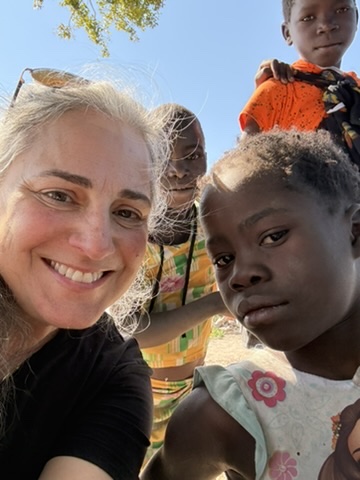
  • I spent most of this month in southern Africa, one of my favorite places in the world. We spent time in Zambia and South Africa, but I really want to focus on the first week of our trip, the part in rural Zambia. One thing that is hard to wrap your head around until you go is how very hard it is to get there, how long it takes, and how determined you must be to reach your destination. 

    We left on Sunday and travelled every day to reach our destination on Thursday. First, large planes carried us across the Atlantic and the Equator, down the full length of the African continent. We landed in Johannesburg, South Africa, on Monday evening. Tuesday morning, we boarded a smaller plane for Livingstone, Zambia. There, we picked up 4-wheel drive trucks with rooftop tents for the next stage of the journey, an 8-hour drive to the town of Mongu in the Western Province. On Wednesday, we left at dawn on the roughest road I’ve ever seen, dodging oxcarts, pedestrians, bicycles laden with people and produce, and potholes that could swallow the entire truck. On Shesheke Road, there are no lanes, and often the best path is the one in the dirt beside the road. By late afternoon, covered in dust and bruised from the bumping, we arrived at the Zambia project base and met the local team that would be going out to the bush with us in the morning. We refueled the trucks, although it took four tries to find a fuel pump that wasn’t out of diesel. Thursday morning, we headed back out, turning off the road after about an hour to drive the tracks in the deep sand for several hours before reaching the village of Mundimunene, where our campsite had been prepared. 

    Why do I tell you all this? Because these people had never heard the Gospel. As hard as it is to believe in our world of instant connectivity and information at our fingertips, this was a truly unreached village. It was hard to get to. It was remote. We slept in tents, cooked on fires, and pooped in a long drop while we were there. And there was something about it that felt holy. The struggle of being there brought home the weight of the eternity of each soul we would interact with. 

    The people of Mundimunene were beautiful. They dug toilets for us. They cleared trees. They welcomed us, strangers from far away, to their village. Beautiful souls. And oppressed. Oppressed by witchcraft and demonic activity. By physical pain with a spiritual root. By the prince of this world. 

    While we were there, we didn’t just speak. We listened. Listened as they told their stories. The school shut down when the teachers fled from the demonic activity. The headaches that the witch doctor’s charms couldn’t take away. Stories of people who needed to hear the Good News.

    And in that place, I saw a whole different set of weapons that Satan employs. We are so used to seeing him sneak his way in. On our screens, disguised as entertainment. In our political discourse, distracting from things that really matter. But not overtly. He never calls his own name out in our culture. He uses soft words, seeking to appear as an angel of light (2 Cor. 11:14). But there in Mundimunene and the surrounding areas, he shouts. He has no problem with being seen. And in both places, the result is the same: brokenness and bondage. 

    You see, in the fight for the human soul, Satan uses many tactics. He charms and threatens, distracts and assaults, sneaks and swaggers. And God’s response to every tactic is the same.

    Incarnation.

    Jesus didn’t send someone else. He came for us. And now He comes through us. The Body of Christ incarnates the presence of Jesus everywhere that we go. And for the past 2,000 years, incarnation has been God’s weapon in the fight for each soul. He goes through us to our world. To the homeless, the orphan, the addict, the hopeless. He goes through us to a village that takes 5 days to get to so that He can contend with Satan for each soul. 

    And there is nothing in our lives that matters more. Being a part of the fight for one soul is the most important thing we will ever do. Today I challenge you: you may not be in a remote village, but you are surrounded by people who need incarnation. Be Jesus to your family, your coworkers, the cashier at the store, and the waitress at the restaurant. Be Jesus to a foster child, a neighbor, a family in need. The fight for one human soul, the incarnation of Christ through us to those around us, is the most valuable way to spend your life.

  • Why do you complain, Jacob?

        Why do you say, Israel,

    “My way is hidden from the Lord;

        my cause is disregarded by my God”?

    Do you not know?

        Have you not heard?

    The Lord is the everlasting God,

        the Creator of the ends of the earth.

    He will not grow tired or weary,

        and his understanding no one can fathom.

    Isaiah 40:27-28

    I think we all have times when we feel like God is not watching, or like our cause has been overlooked by him. This is especially true in the middle of the hardest days. There are times when we look and think that surely, if God were good, if He were trustworthy, He would not overlook this need I have. He would move on my behalf in this situation; he would… whatever that is for you. In the moment, our needs can seem incredibly urgent. But in these verses we find reassurance that God is not tired, he’s not taking a break, he’s not ignoring our needs or our causes. The Lord is everlasting, meaning he has no end and no beginning. That is hugely different from anything I have experienced as a human; my finite little brain isn’t even sure how to process that. But one thing I know is that if I can’t understand the concept that God exists in, I surely can’t understand his action or inaction well enough to judge it.

    Surely Hagar felt abandoned by God when she was forced to flee from Sarah. As a slave, Hagar had no rights, and she was first forced by Sarah to sleep with Abraham in the hope of producing a son for him, then mistreated by Sarah because she got pregnant, even though it was Sarah’s plan. Hagar fled into the wilderness, and as she rested, the Lord spoke to her. Genesis 16 tells us that she called the place Be’er Lahai Roi, the “Well of the God Who Sees Me.” God didn’t change her situation. In fact, He sent her back to Sarah with the instruction to submit to her. But Hagar knew she was seen, and knowing that made a difference to her.

    Maybe we don’t understand why God doesn’t change our circumstances right now, but if we remember that He sees us, we can find peace in the knowledge that He knows what He’s doing. Finding peace in God during hard times isn’t something that happens naturally. It’s a choice we make when we remember that He is so much bigger and more active in our lives than we usually give Him credit for. Today, make a decision to purposefully rest in knowing that God is at work in your life right now, even if you can’t see it.